
TOTPRadius - RADIUS Dynamic attribute response based on AD Group membership
This can be configured in Settings → RADIUS Service configuration:
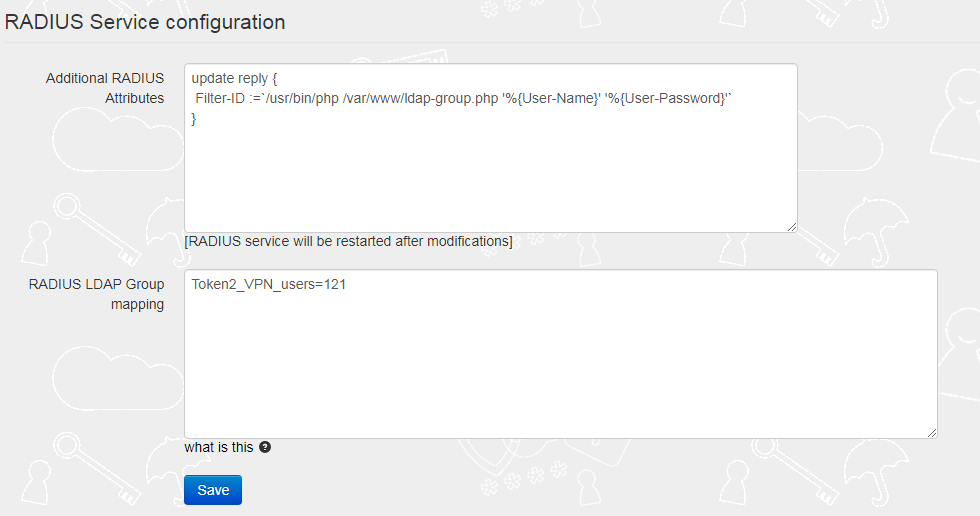
The 'Additional RADIUS Attributes' field should contain the reference to the ldap-group script as shown on the example below:
update reply { Filter-ID :=`/usr/bin/php /var/www/ldap-group.php '%{User-Name}' '%{User-Password}'` }
Important: The group names used for this parameter should not contain "=" sign.
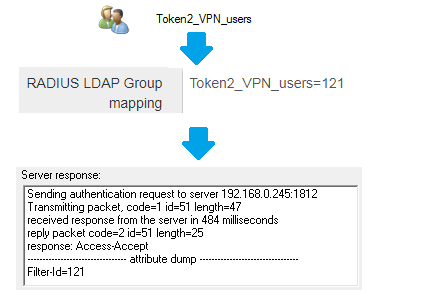
The 'RADIUS LDAP Group mapping' field should contain a mapping rule, which allows members of the specified AD group to have Tunnel-Private-Group-ID attribute equal to some value.
For the example above, if a user belongs to an AD Group named 'Token2_VPN_users', the Filter-ID will be included in the Radius reply as below:
About
Installation and configuration
- Installation and initial configuration
- Network configuration
- Migrating from older versions
- LDAP Configuration
- Azure AD Configuration
- Self-service enrollment portal
- Web and LDAPS Certificates
- Syslog configuration
- Single-factor authentication exceptions
- Slave appliance mode
- Dynamic RADIUS Attributes
Integration guides
Blog
04-04-2026
Understanding FIDO User Verification Modes and the always_uv Setting
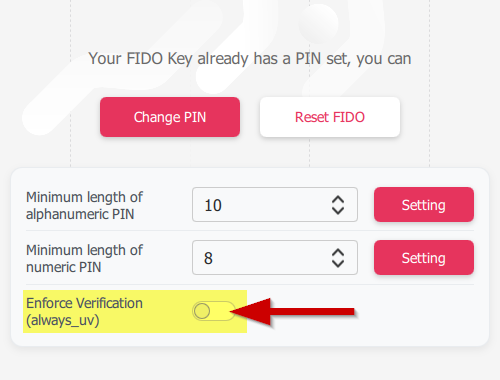 Token2 R3.3 and later FIDO2 keys enforce user verification by default with always_uv = true, improving security, though some platforms and apps like Windows 10, macOS, and certain legacy clients may fail to handle this override correctly.
05-03-2026
Introducing TOTPVault — self-hosted TOTP management for teams
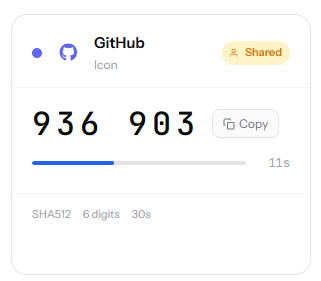 Most TOTP apps work by distributing copies of the secret to every person who needs access — fine for personal accounts, but for shared service accounts it means MFA secrets scattered across people's phones with no clean way to revoke access when someone leaves.
21-12-2025
Android, NFC, and the Missing Piece of WebAuthn
 For years, Android users have faced a frustrating limitation—Android does not support CTAP2 over NFC. This means no PIN verification and no discoverable credentials (passkeys) when using NFC, and therefore limited to simple U2F-style flows without user verification. That said, there finally seems to be a solution.